

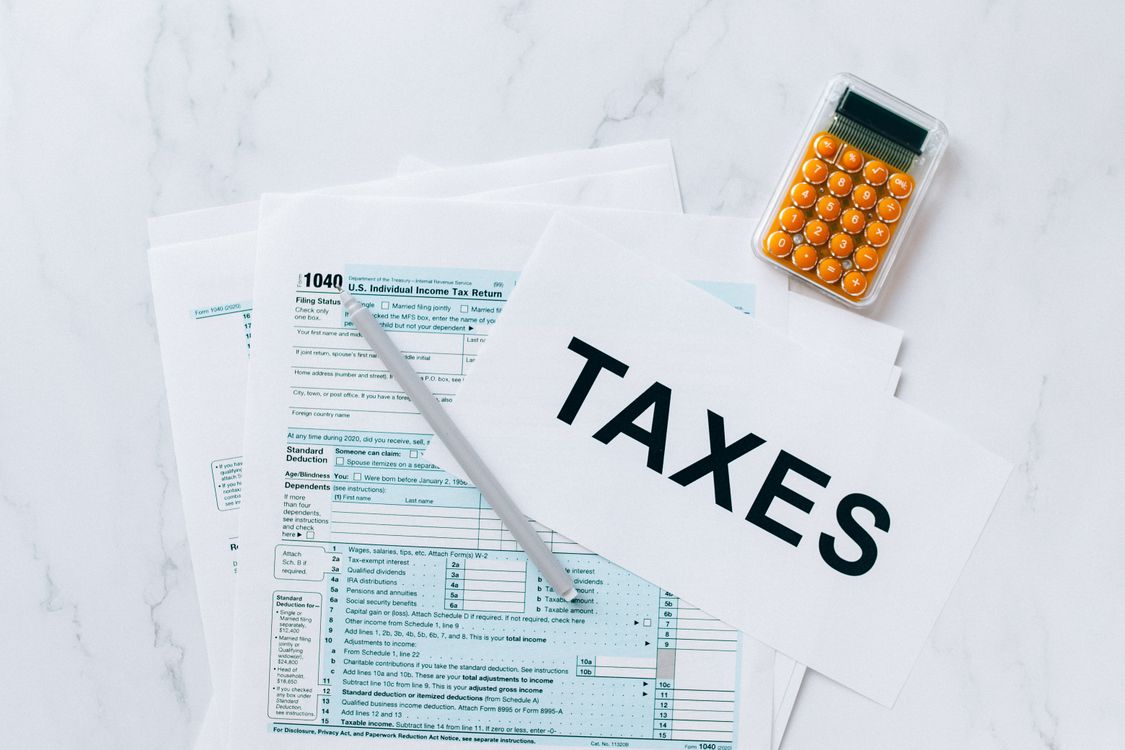
Imagine this. You make your final income-driven repayment — the 240th or 300th payment, twenty or twenty-five years after you first borrowed. The letter arrives: your remaining balance is forgiven. You celebrate. Then, a few months later, a second letter arrives: a Form 1099-C. The forgiven amount has been added to your taxable income, and you owe the IRS thousands of dollars on money you never actually received.
That's the student loan tax bomb. And as of January 1, 2026, it's back.
For five years, it didn't exist. The American Rescue Plan Act of 2021 made nearly all forgiven student loan debt tax-free at the federal level — but only for discharges between 2021 and 2025. That protection expired on December 31, 2025. Congress did not extend it, and the One Big Beautiful Bill Act, signed July 4, 2025, left it to lapse. So if your loans are forgiven under an income-driven repayment plan in 2026 or later, the forgiven balance is generally taxable income again.
Here's the part that stings: this hits hardest the people who can least afford it.
How big is the bill, really?
Let's do the math, because vague warnings don't help anyone plan. Say you've been on an income-driven plan for 20 years. Your payments were small because your income was modest — and interest kept growing faster than you paid it down. That's not a failure; that's how the plans were designed. After two decades, you might still owe $50,000 even though you originally borrowed $40,000.
If that $50,000 is forgiven in 2026 and you're in the 22% tax bracket, the federal tax on the forgiveness alone is roughly $11,000. Forgive $80,000 instead and you're looking at about $17,600. And because the whole forgiven amount lands in a single tax year, it can push you into a higher bracket — so some of it gets taxed at an even higher rate.
A Protect Borrowers report from October 2026 estimates 2 to 3 million borrowers will be affected over the next decade, mostly earning under $60,000 a year. For some families, the tax bill could double or triple what they normally pay. That's why people call it a bomb: the relief arrives, and then the bill does.
Who gets hit — and who doesn't
Not every kind of forgiveness is taxable. The distinction matters, so here's the short version:
- Taxable from 2026: income-driven repayment forgiveness after 20 or 25 years on IBR, PAYE, or ICR — and after 30 years on the new Repayment Assistance Plan, which launched July 1, 2026. Borrower defense and closed-school discharges also generally lose their protection for discharges processed in 2026 or later.
- Still tax-free: Public Service Loan Forgiveness has its own permanent exclusion in the tax code — PSLF forgiveness is not taxable, no matter the year. Discharges for death or total and permanent disability are also permanently excluded now, after the OBBBA made that piece permanent.
There's one more carve-out worth knowing about, because it affects people caught in the forgiveness backlog. Under a court settlement between the Department of Education and the American Federation of Teachers, the date that counts for taxes is the date you became eligible for forgiveness — the month you crossed 240 or 300 qualifying payments — not the month your servicer got around to processing it. So if you qualified by December 31, 2025, your forgiveness should stay tax-free even if the discharge posts in 2026. If that's your situation, check your payment count and keep your records — don't just take the 1099-C at face value.
5 ways to shrink the bill
You can't make the tax disappear by wishing. But you can plan for it, and the earlier you start, the more options you have.
1. Build a forgiveness sinking fund
If your forgiveness date is years away, start setting aside money now — even $50 or $100 a month in a high-yield savings account. By the time the 1099-C arrives, you'll have a dedicated pot for the tax bill instead of a panic. Treat it like a second, smaller loan payment that ends the day you're forgiven.
2. Check the insolvency exclusion
This is the most overlooked defense, and it helps exactly the people who need it most. If your total debts exceeded your total assets immediately before the discharge — in other words, you were insolvent — you can exclude some or all of the forgiven amount from income using IRS Form 982. Add up everything you owe and everything you own, honestly, and see where you land. Many long-term IDR borrowers qualify for at least a partial exclusion. A tax professional can run the numbers in one sitting.
3. Adjust withholding or pay estimated taxes in the forgiveness year
If you know forgiveness is coming in 2026, don't wait until April 2027 to discover the bill. Bump up your paycheck withholding or make quarterly estimated payments during the forgiveness year. It doesn't reduce the total — but it spreads the pain and avoids an underpayment penalty on top of everything else.
4. Don't confuse federal and state rules
Everything above is federal. Your state is a separate question, and states vary wildly. Some follow the federal treatment, some don't tax forgiven student loans at all, and a few have their own exclusions. Check your state's rules before you budget — the state bill can be a nasty surprise if you assume it matches the federal one.
5. Talk to a tax pro before the forgiveness year — not after
A single consultation before your discharge year can save you thousands: timing strategies, the insolvency calculation, whether to file jointly or separately that year, and whether any pending legislation changes the picture. Speaking of which — the Student Loan Tax Elimination Act (S. 3538) has been introduced in Congress to restore the exclusion, but as of this writing it has not been enacted. Don't plan your finances around a bill that hasn't passed. Plan around the law as it stands, and treat any future fix as a bonus.
What to do this week
Three quick moves. First, find out where you stand: log in to your servicer and check how many qualifying payments you've made and when your forgiveness date actually falls. Second, if your date is in 2026 or 2027, start the sinking fund — even a small one beats none. Third, if you think you qualified before December 31, 2025 but your discharge is still processing, pull your payment history now, because that date is what protects you.
The tax bomb isn't a reason to abandon income-driven repayment — for most borrowers it's still the best path to forgiveness. It's a reason to stop treating forgiveness as the finish line and start treating it as a date on the calendar with a price tag attached. Know the price, save toward it, and the letter in the mail won't be a bomb. It'll just be a bill you were ready for.
Related reading: if you're counting on public service forgiveness instead, the PSLF buyback backlog is 90,000 deep — here's what the new lawsuit means for you. And if you're still on the SAVE plan, the SAVE deadline already passed — 5 ways to lower your payment now. For borrowers in default, forced collections are restarting in 2027 — here's how garnishment works.
Frequently asked questions
Is student loan forgiveness taxable in 2026?
Yes, generally. The American Rescue Plan's tax exclusion expired December 31, 2025, so forgiveness under income-driven repayment plans in 2026 or later is treated as taxable cancellation-of-debt income. Public Service Loan Forgiveness, death discharges, and total-and-permanent-disability discharges stay tax-free.
How much tax will I owe if $50,000 is forgiven?
It depends on your bracket, but a borrower in the 22% bracket would owe roughly $11,000 in federal tax on a $50,000 discharge. The forgiven amount is added to your income in a single year, which can also push you into a higher bracket. State tax is separate and varies by state.
What is the insolvency exclusion for student loan forgiveness?
If your total liabilities exceeded your total assets immediately before the discharge, you may exclude some or all of the forgiven amount from income — up to the amount of your insolvency — by filing IRS Form 982. This is the most common defense against the IDR tax bomb and applies regardless of which plan you're on.
I qualified for forgiveness in 2025 but it wasn't processed until 2026. Am I taxed?
Probably not. Under the Department of Education's settlement with the American Federation of Teachers, the date you became eligible — the month you hit 240 or 300 qualifying payments — is the date that counts for taxes, not the processing date. Keep your payment records as proof.
Will Congress restore the tax-free exclusion?
The Student Loan Tax Elimination Act (S. 3538) has been introduced to restore it, but it has not been enacted as of November 2026. Don't plan around it passing — plan for the tax as it stands today, and treat any future fix as a welcome surprise.
Disclaimer: This article is for general information only and is not tax, financial, or legal advice. Tax rules for canceled debt are complex and change; consult a qualified tax professional about your specific situation before making decisions.


0 Comments